Hoang-Loc Cao

My research focuses on developing trustworthy medical AI systems that can learn from limited data, collaborate with humans, and improve over time. Previously, I earned a B.S. degree in Data Science from the University of Science, VNU-HCM, where I worked with Prof. Bac Le.

Explore my research vision

Portrait of Hoang-Loc Cao

News

2026
Sep 01 Our team achieved Rank 1st at the BIC-MAC Challenge, MICCAI 2026
Jun 15 Our team achieved Rank 1st at the Multimedia Verification Challenge, ACM ICMR 2026
Jun 01 My paper ArgMAD was accepted to KES 2026
Apr 15 Our team achieved Rank 3rd at the WBCBench Challenge, IEEE ISBI 2026
Apr 01 My paper ACAL was accepted to Canadian AI 2026
Mar 01 My two papers were accepted as oral to IEEE ISBI 2026

Selected Publications

* equal contribution

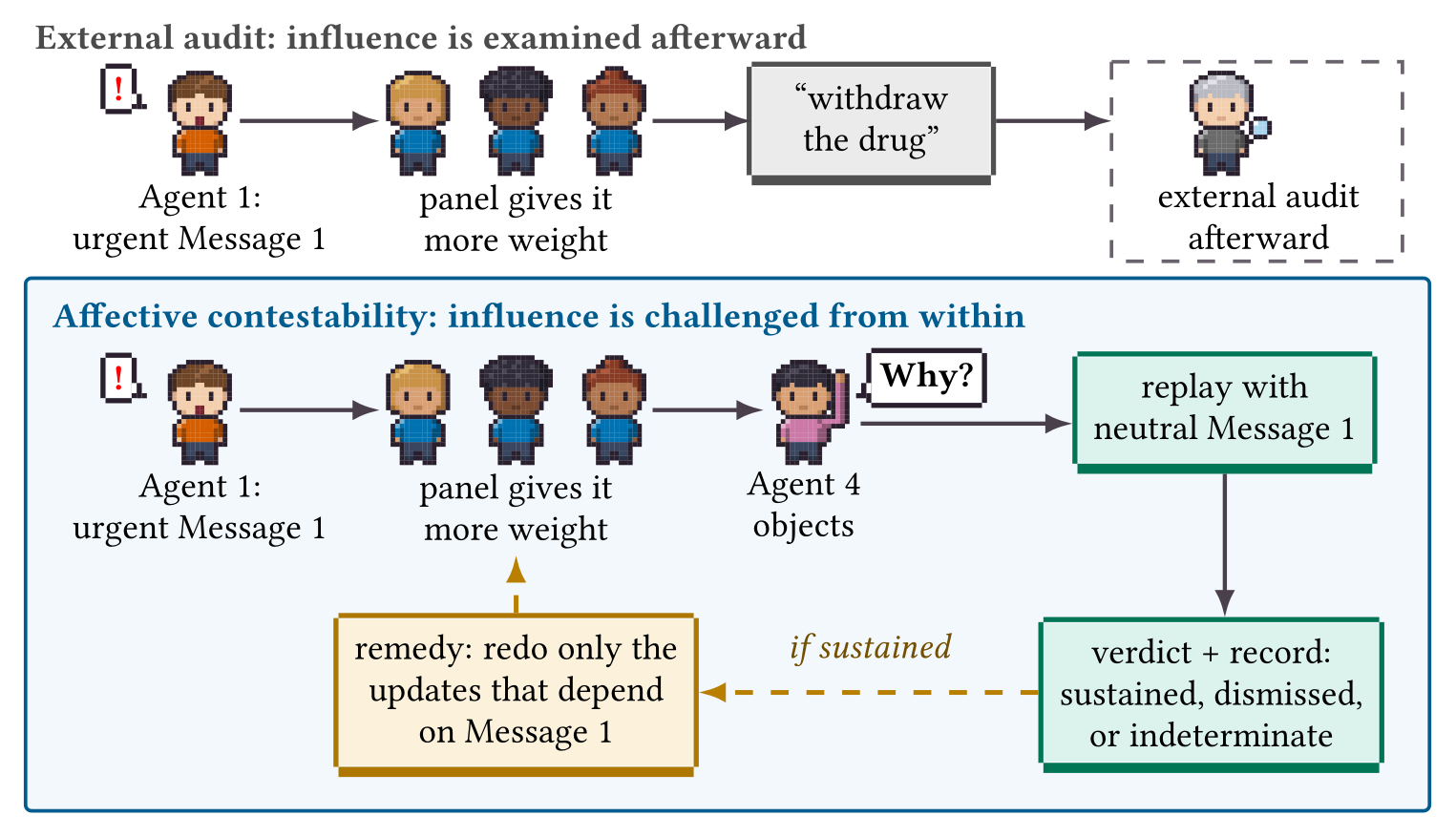
Two lanes of pixel-art agents. External audit: Agent 1 sends an urgent message, a panel gives it more weight, the panel decides to withdraw the drug, and an outside auditor examines the case afterward. Affective contestability: Agent 4 asks Why?, the message is replayed in neutral form, a verdict is recorded, and if sustained only the updates that depend on the message are redone.

Affective Contestability: Giving LLM Societies the Right to Ask Why a Message Moved Them

Truong Thanh Hung Nguyen*, Hoang-Loc Cao*, Vo Thanh Khang Nguyen, Ha Thanh Nguyen, Hung Cao, Long Tran-Thanh

Preprint 2026 Under Review

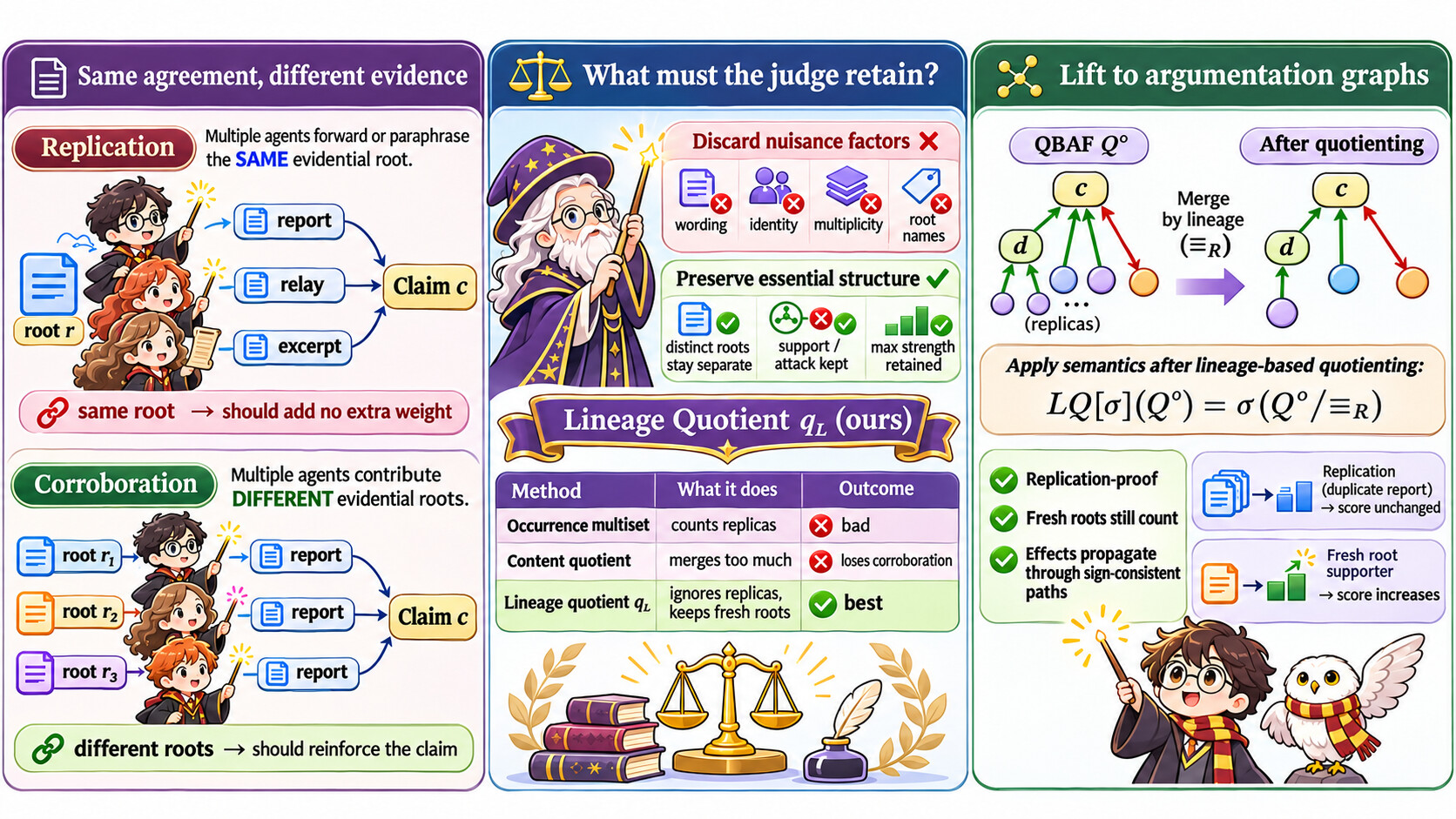
Three-panel overview. Replication: several agents forward or paraphrase the same evidential root, which should add no extra weight to a claim. Corroboration: agents contribute different roots, which should reinforce it. The lineage quotient merges arguments by lineage before applying argumentation semantics, so replicas are ignored while fresh roots still count, unlike occurrence-multiset or content-quotient baselines.

Replication or Corroboration? An Axiomatic Framework for Evidential Dependence in Multi-Agent Debate

Hoang-Loc Cao*, Truong Thanh Hung Nguyen*, Phuc Truong Loc Nguyen, Vo Thanh Khang Nguyen, Phuc Ho, Hung Nguyen, Duc Pham, Long Tran-Thanh, Hung Cao

Preprint 2026 Under Review

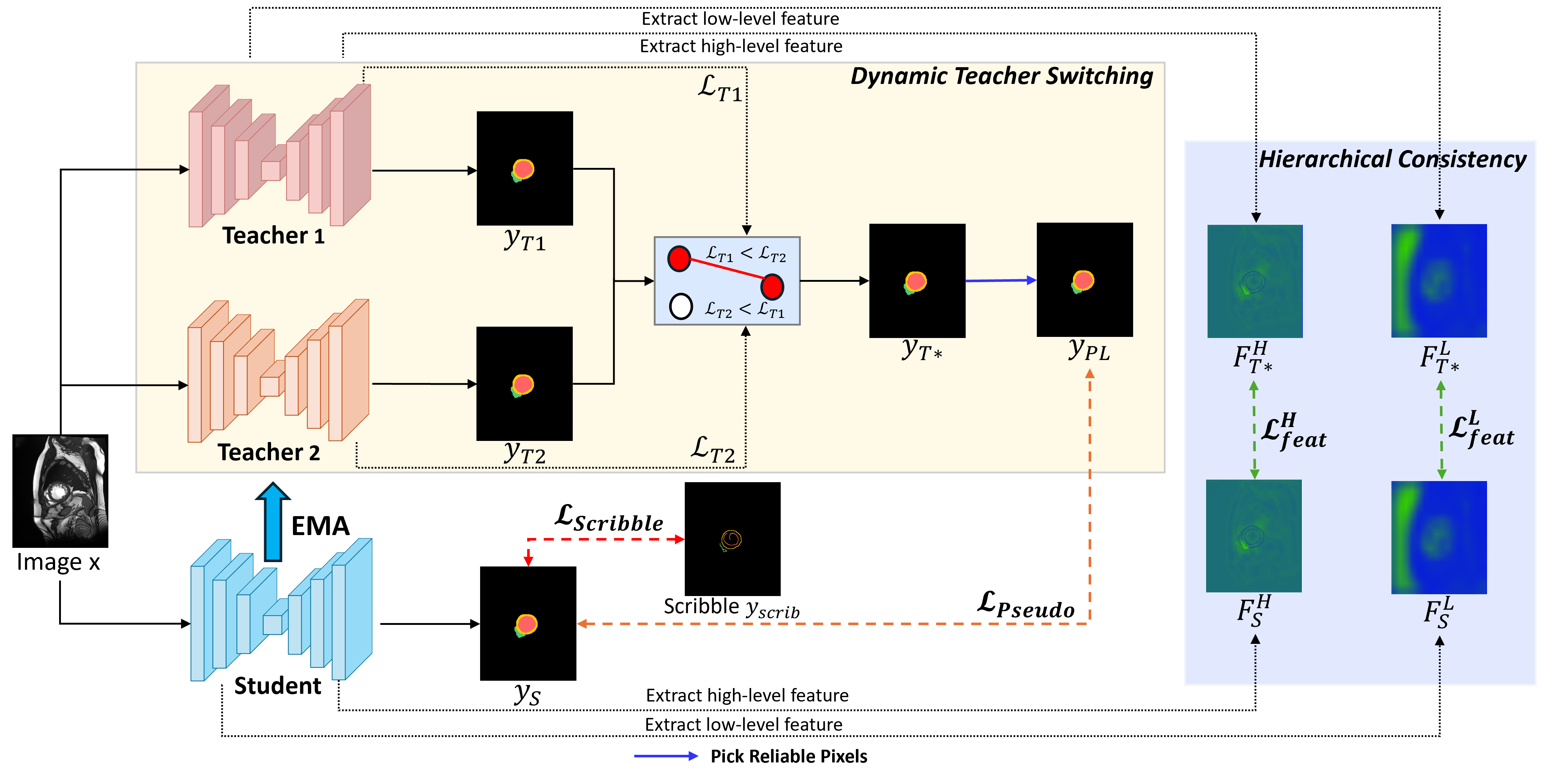
SDT-Net overview. Two EMA teachers predict segmentations; dynamic teacher switching picks the teacher with lower loss and keeps reliable pixels as the pseudo-label. The student is trained with a scribble loss and a pseudo-label loss, plus hierarchical consistency between teacher and student high-level and low-level features.

Scribble-Supervised Medical Image Segmentation with Dynamic Teacher Switching and Hierarchical Consistency

Thanh-Huy Nguyen*, Hoang-Loc Cao*, Dat T. Chung, Mai-Anh Vu, Thanh-Minh Nguyen, Minh Le, Phat K. Huynh, Ulas Bagci

IEEE 23rd International Symposium on Biomedical Imaging (ISBI) 2026 Oral

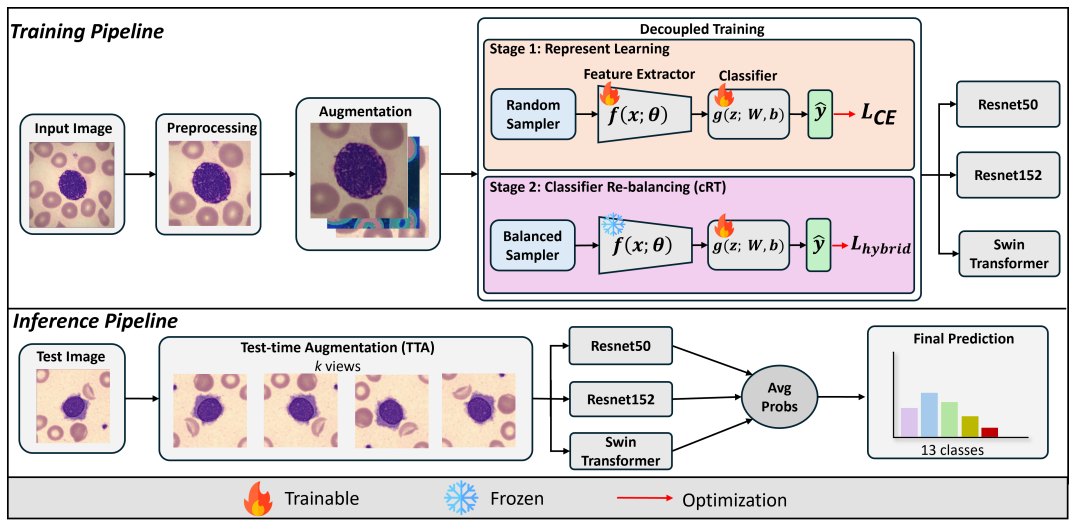
Training and inference pipeline. Training: input image, preprocessing, augmentation, then decoupled training with representation learning followed by classifier re-balancing (cRT) on a frozen feature extractor, applied to ResNet50, ResNet152, and Swin Transformer. Inference: test-time augmentation with k views, the three models' probabilities averaged into a final prediction over 13 classes.

Robust White Blood Cell Classification with Stain-Normalized Decoupled Learning and Ensembling

Luu Le*, Hoang-Loc Cao*, Ha-Hieu Pham, Thanh-Huy Nguyen, Ulas Bagci

IEEE 23rd International Symposium on Biomedical Imaging (ISBI) 2026 Oral

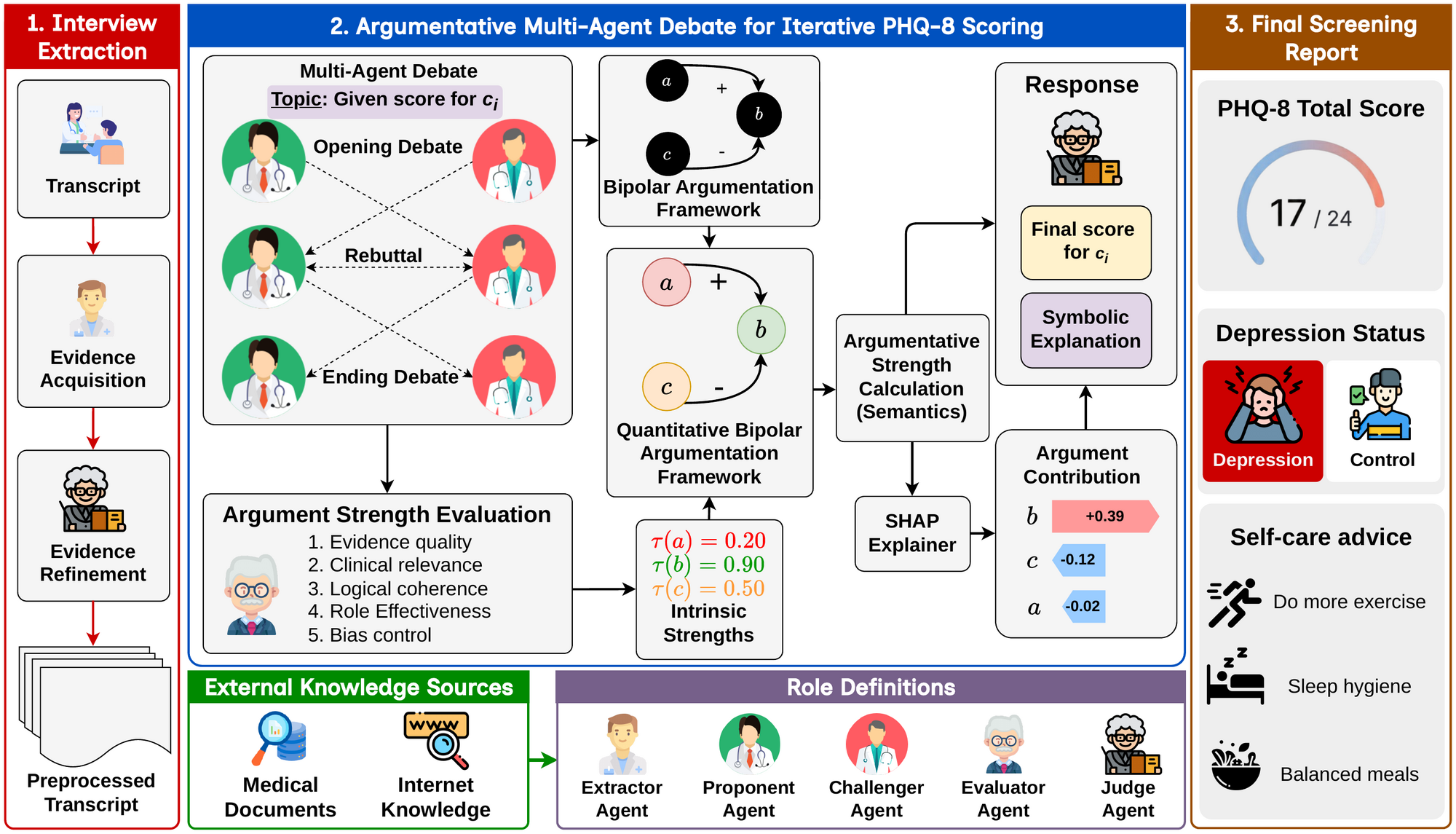
ArgMAD overview in three stages. 1: interview extraction turns a transcript into preprocessed evidence through evidence acquisition and refinement. 2: argumentative multi-agent debate for iterative PHQ-8 scoring, where proponent and challenger agents hold opening, rebuttal and ending debate rounds, arguments are evaluated for strength, and a quantitative bipolar argumentation framework with SHAP explanations yields a final score and symbolic explanation. 3: a final screening report with the PHQ-8 total score, depression status and self-care advice.

Argumentative Multi-Agent Debate for Explainable Depression Detection in Clinical Interviews

Hoang-Loc Cao*, Van Pham*, Bac Le

International Conference on Knowledge-Based and Intelligent Information & Engineering Systems (KES) 2026
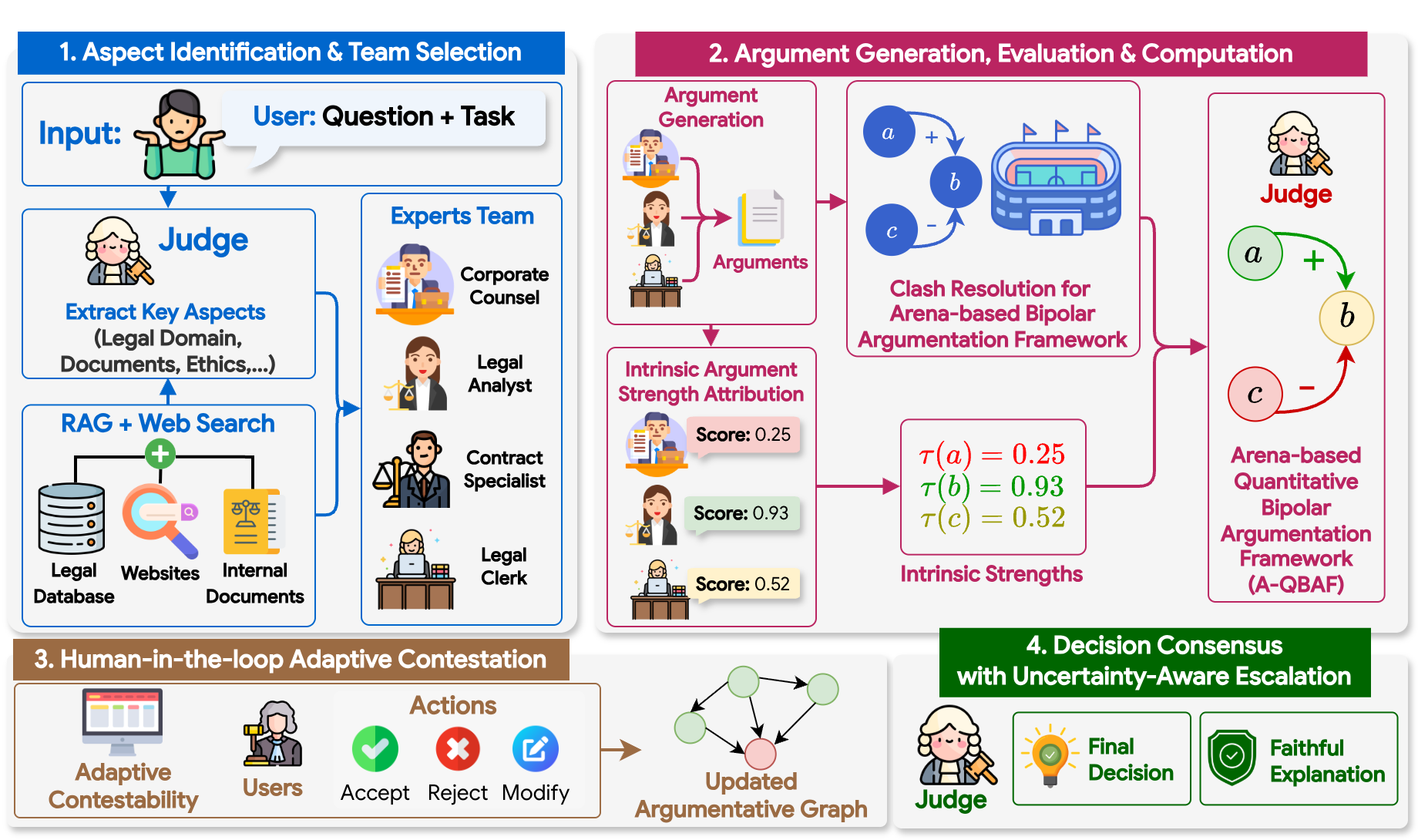
ACAL overview in four stages. 1: a judge extracts key aspects from the question and task, supported by RAG and web search, and selects a team of legal experts. 2: experts generate arguments, intrinsic strengths are attributed, and an arena-based bipolar argumentation framework resolves clashes into an A-QBAF. 3: human-in-the-loop adaptive contestation lets users accept, reject or modify arguments, updating the argumentative graph. 4: decision consensus with uncertainty-aware escalation yields a final decision and a faithful explanation.

Neuro-Symbolic Adaptive Collaboration of Arena-Based Argumentative LLMs for Contestable Legal Reasoning

Hoang-Loc Cao*, Phuc Ho*, Truong Thanh Hung Nguyen, Phuc Truong Loc Nguyen, Dinh Thien Loc Nguyen, Hung Cao

The 39th Canadian Conference on Artificial Intelligence (Canadian AI) 2026
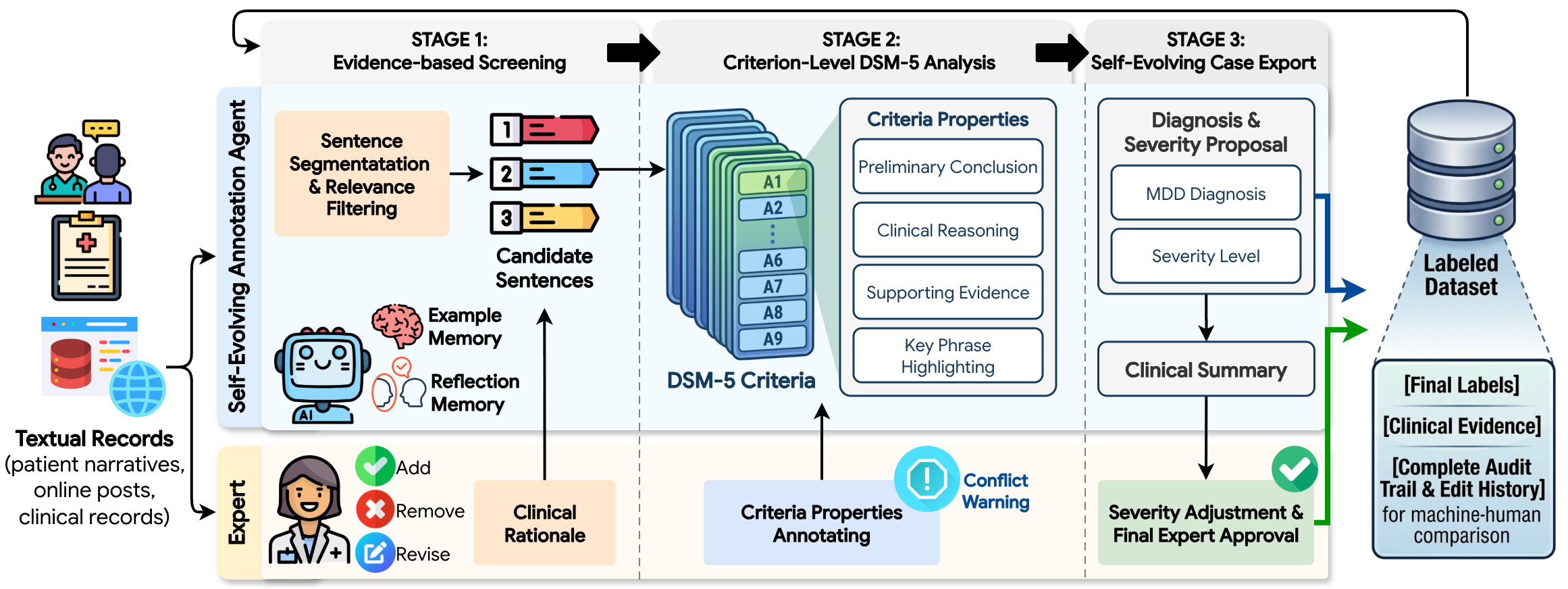
Human-centered, self-evolving DSM-5-TR annotation framework in three stages. 1: evidence-based screening, where an annotation agent with example and reflection memory segments and filters textual records into candidate sentences. 2: criterion-level DSM-5 analysis, with preliminary conclusion, clinical reasoning, supporting evidence and key phrase highlighting, and an expert who adds, removes or revises annotations. 3: self-evolving case export, with diagnosis and severity proposal, clinical summary and expert approval, producing a labeled dataset with an audit trail.

Self-Evolving Human-Centered Framework for Explainable Depression Symptom Annotation

Hoang-Loc Cao*, Van Pham*, Truong Thanh Hung Nguyen, Phuc Truong Loc Nguyen, Phuc Ho, Veronica Whitford, Hung Cao

IEEE International Conference on Omni-Layer Intelligent Systems (COINS) 2026

Education

Experience